
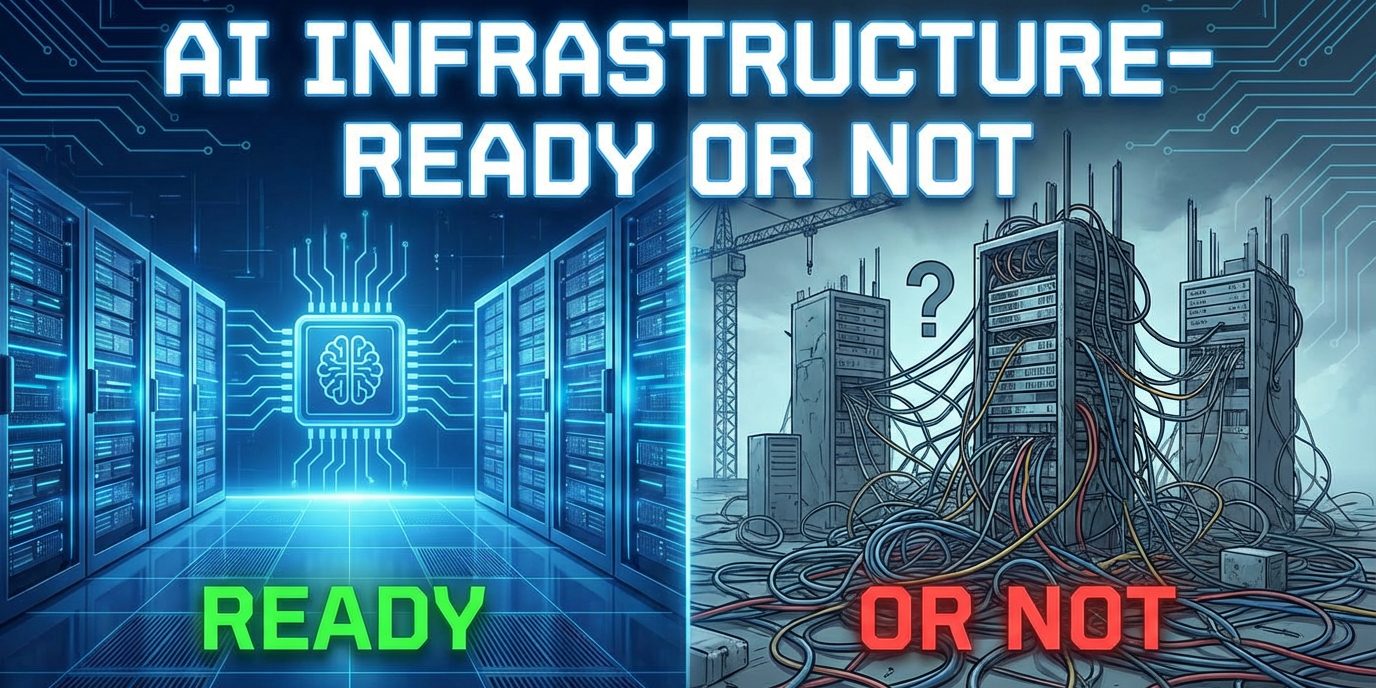
AI Readiness Is About Infrastructure. Are Your Clients Prepped?
Not long ago, the “biggest risk” in a client environment might’ve been a rogue USB stick or someone trying to install LimeWire on a file server.
Those days are over.
We’re now in the era of shadow AI, where well-meaning employees try to “work smarter” by pasting company data into whatever AI or productivity tool they find online. And the uncomfortable truth is this: AI adoption is moving faster than most organizations’ ability to secure it.
At RJ2 Technologies, we’re seeing a clear pattern: clients feel optimistic about AI, but their infrastructure, governance, and identity controls aren’t keeping up.
The “Dual Disconnect”: Confidence vs. Capability
A number that should give every IT leader pause:
- 40% of organizations self-assess as “AI mature.”
- But when measured objectively, only 22% meet the criteria for true “Leading” readiness.
That gap is what we call the Dual Disconnect: organizational confidence has outpaced the underlying infrastructure.
This isn’t about shaming teams for experimenting. It’s about recognizing that experimentation doesn’t scale safely, and unmanaged AI use quickly becomes a security and compliance problem.
Why AI Maturity Fails to Scale (and Where Risk Hides)
AI is no longer a side project. It’s becoming a core operational engine, top of mind for everyone from the boardroom to the intern desk.
That “move fast” mentality introduces real risks, including:
- Shadow AI tools that bypass procurement and security review
- Data leakage when employees paste sensitive info into public AI systems
- Unmanaged SaaS sprawl, where nobody can confidently answer: “What apps are we using, and who has access?”
- Autonomous agents and integrations connecting to systems with more permission than intended
- Security blind spots that don’t show up until you’re already responding to an incident
This is why AI readiness isn’t a training session or a policy PDF; it’s an infrastructure conversation.
AI Readiness Is an Infrastructure Problem (Not a “Department of No” Problem)
Organizations don’t need IT to become the “Department of No.” They need IT to become the enabler of safe, governed AI use.
That requires a foundation built on a few non-negotiables:
1) Identity as the control plane
If you can’t confidently manage identity (users, devices, access, lifecycle), you can’t govern AI usage. Identity is how you enforce:
- who can use which tools
- what data they can access
- which devices are trusted
- what happens when roles change or someone leaves
2) Visibility into SaaS (including “unknown” apps)
Most environments have more apps in use than anyone realizes, especially AI tools. Without discovery, you’re managing a fleet you can’t fully see.
3) Device and access governance that scales
AI doesn’t introduce brand-new security fundamentals; it stresses the old ones. If device posture, access controls, and offboarding are inconsistent, AI accelerates the impact of those gaps.
4) Clear guardrails for data
Clients need practical boundaries around what data can be shared, where, and how. The goal is safe enablement, not blanket bans that people work around.
A Practical Example: SaaS Sprawl Is Now an AI Security Issue
Many teams are paying for far more SaaS licenses than they need, and they’re also carrying dozens of unmanaged apps that were “procured” informally (sometimes by employees who left months ago).
That’s not just wasted spend. It’s risk.
When SaaS management is weak, AI risk grows because:
- employees sign up for AI tools with corporate email addresses
- access persists after role changes or offboarding
- sensitive files are shared into tools IT didn’t approve
- nobody can prove what data went where
This is why governing AI starts with governing access.
Are Your Clients Actually AI-Ready?
If your clients are already using AI tools (they are), the real question isn’t whether AI is happening, it’s whether their IT and security foundation is ready to handle the risks that come with it.
AI readiness looks a lot like strong fundamentals:
- clear visibility into who’s using what (and where data is going)
- tight identity and access controls
- consistent device management and secure onboarding/offboarding
- policies that people can actually follow, backed by enforcement
That’s exactly where RJ2 Technologies comes in.
What we do is IT and cybersecurity; the infrastructure, access controls, and governance that reduce exposure and keep your environment defensible as new tools (AI included) show up in the workplace.
If you want a clear view of where your gaps are and a practical plan to tighten them up, book a discovery call with us. We’ll review your current setup and help you prioritize the IT and security improvements that make adoption of new technology safer without slowing the business down.