
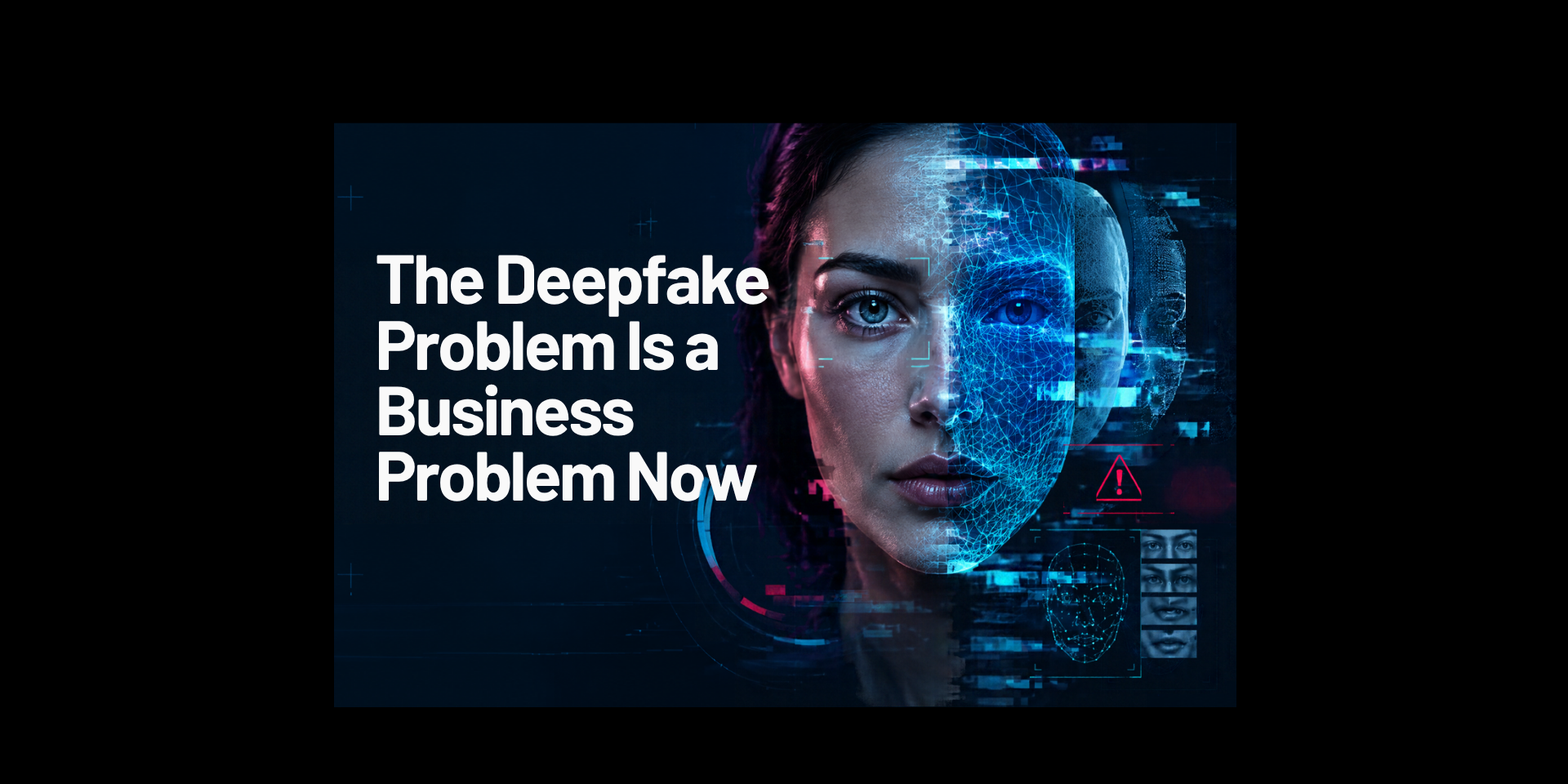
Happy Tuesday! Today we are getting into something that started as a concern for politicians and celebrities and has firmly arrived as a genuine business threat: deepfake technology and AI-generated disinformation. Gartner formally added disinformation security to its top strategic technology trends list for 2026, and the reason is straightforward. AI-manufactured deception is now sophisticated enough to fool employees, executives, and financial institutions in ways that have real dollar consequences.
What Deepfake Attacks Look Like in a Business Context
Deepfake attacks targeting businesses typically fall into a few categories, and all of them are more convincing than most people realize until they have seen an example.
CEO Fraud via Audio and Video Attackers are cloning the voices and likenesses of company executives to make fraudulent authorization requests. In documented cases from 2026, employees in finance departments received video calls from what appeared to be their CEO or CFO, instructing them to transfer funds to an account for a confidential acquisition. The video was AI-generated. The funds transfer was real.
AI-Generated Phishing at Scale Rather than the clunky, grammatically broken phishing emails of five years ago, AI-generated phishing messages in 2026 are indistinguishable from legitimate communication. They reference real projects, real people, and real business contexts scraped from public sources. The open rates and click rates on these messages are dramatically higher than traditional phishing.
Synthetic Identity Creation Attackers are using AI to create entirely fabricated identities, complete with convincing profile photos, work histories, and references, to apply for remote positions at businesses. Once inside an organization, these synthetic employees steal data, plant malware, or create access vectors for future attacks.
Building Defenses Against AI-Generated Deception
Defending against deepfakes and AI disinformation requires a combination of technical controls and human protocols. Verification procedures for financial transfers and sensitive requests that go beyond visual or voice confirmation are now essential. Callback verification through a known number, not one provided in the suspicious message, is a basic but effective control.
On the technical side, email authentication protocols, AI-powered email security tools that detect AI-generated content, and endpoint detection that can identify unusual data access patterns all contribute to a layered defense.
This Is Where RJ2T Comes In
RJ2 Technologies helps businesses build the security controls and employee protocols that reduce exposure to AI-generated deception. The threats have evolved, and the defenses need to evolve with them. From email security and endpoint protection to security awareness training that specifically addresses deepfake scenarios, we help your team stay ahead of the attackers who are counting on you not to be.
Book your free discovery call here: https://meetings.hubspot.com/jeff-dann/free-discovery-call