
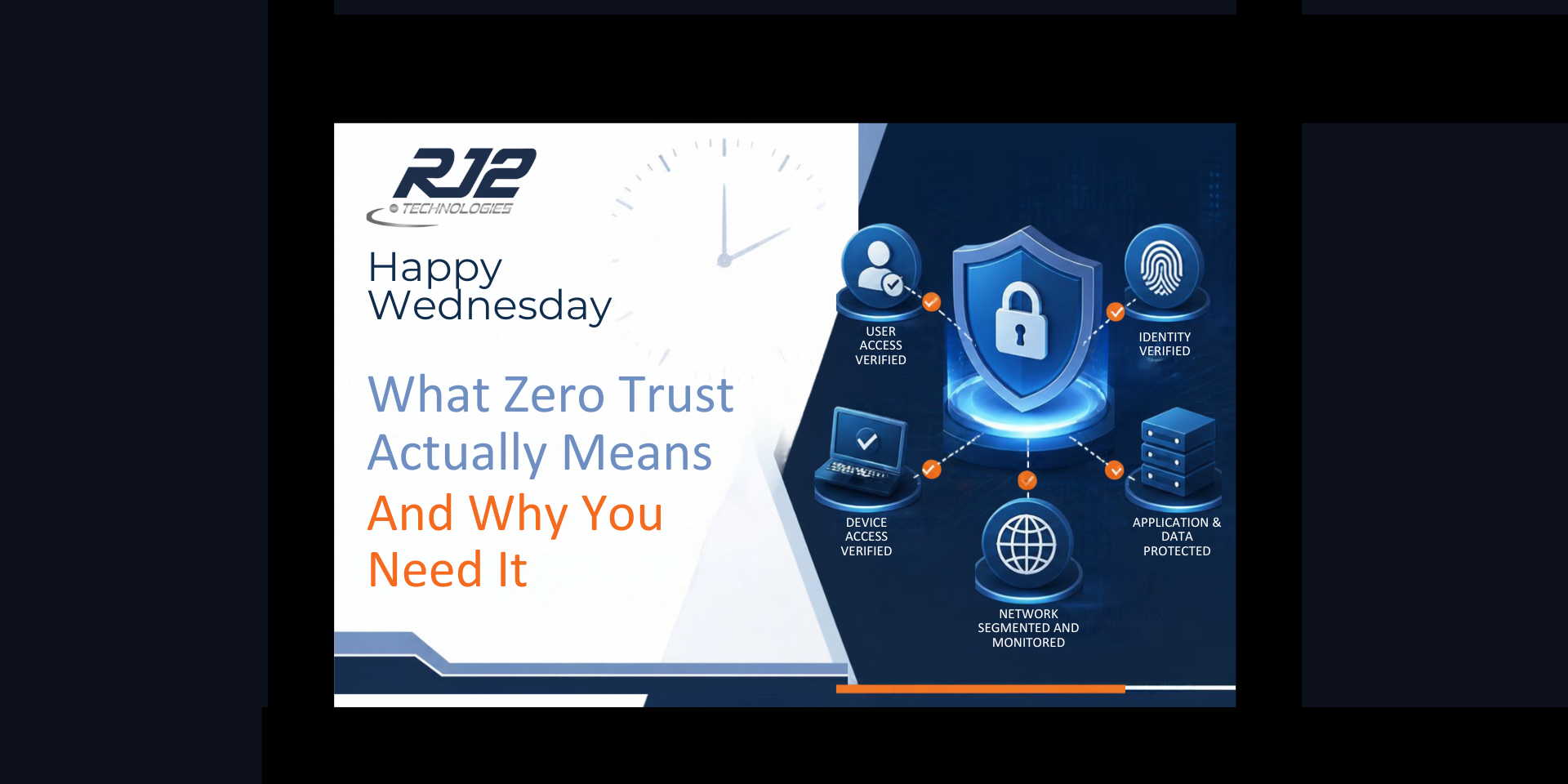
Happy midweek! Let’s clear something up today, because “Zero Trust” has become one of those phrases that gets thrown around constantly in cybersecurity conversations without a lot of explanation. By the end of this post, you will understand exactly what it means and why it is one of the most important security frameworks for your business right now.
The Old Way: Trust, Then Verify Later
Traditional network security operated on a castle-and-moat model. Everything outside the perimeter was untrusted. Everything inside was trusted. Once someone was on the network, whether logging in from the office or through a VPN, they were largely given the benefit of the doubt.
That model made sense when everyone worked in one building and data lived on on-premises servers. In 2026, it is a liability.
Zero Trust: Never Trust, Always Verify
Zero Trust flips the entire assumption. Under a Zero Trust framework, no user, no device, and no application is automatically trusted, regardless of where they are connecting from or whether they have connected before. Every access request is verified every time.
The practical components of Zero Trust include:
Identity Verification Every user must authenticate, typically using multi-factor authentication, before accessing any resource. Not just at login, but continuously, re-verifying as they move between systems.
Least Privilege Access Users are given only the permissions they need for their specific role, nothing more. An accountant does not have access to engineering files. A remote worker does not have access to systems they never use.
Device Trust Not every device that wants to connect to your network should be allowed to. Zero Trust frameworks evaluate device health, patch status, and compliance before granting access.
Micro-Segmentation Even inside your network, Zero Trust divides resources into segments. If an attacker does get in, they cannot move freely. The damage is contained.
Why Zero Trust Is the Right Framework for 2026
With remote work widespread, cloud services everywhere, and AI-powered attacks targeting credential theft, the castle-and-moat model simply does not hold up. Zero Trust was built for exactly this environment.
This Is Where RJ2T Comes In
RJ2 Technologies designs and implements Zero Trust security frameworks for businesses of all sizes. We do not just apply a label. We build the actual identity policies, access controls, and monitoring systems that make Zero Trust real and effective for your organization.
Book your free discovery call here: https://meetings.hubspot.com/jeff-dann/free-discovery-call