
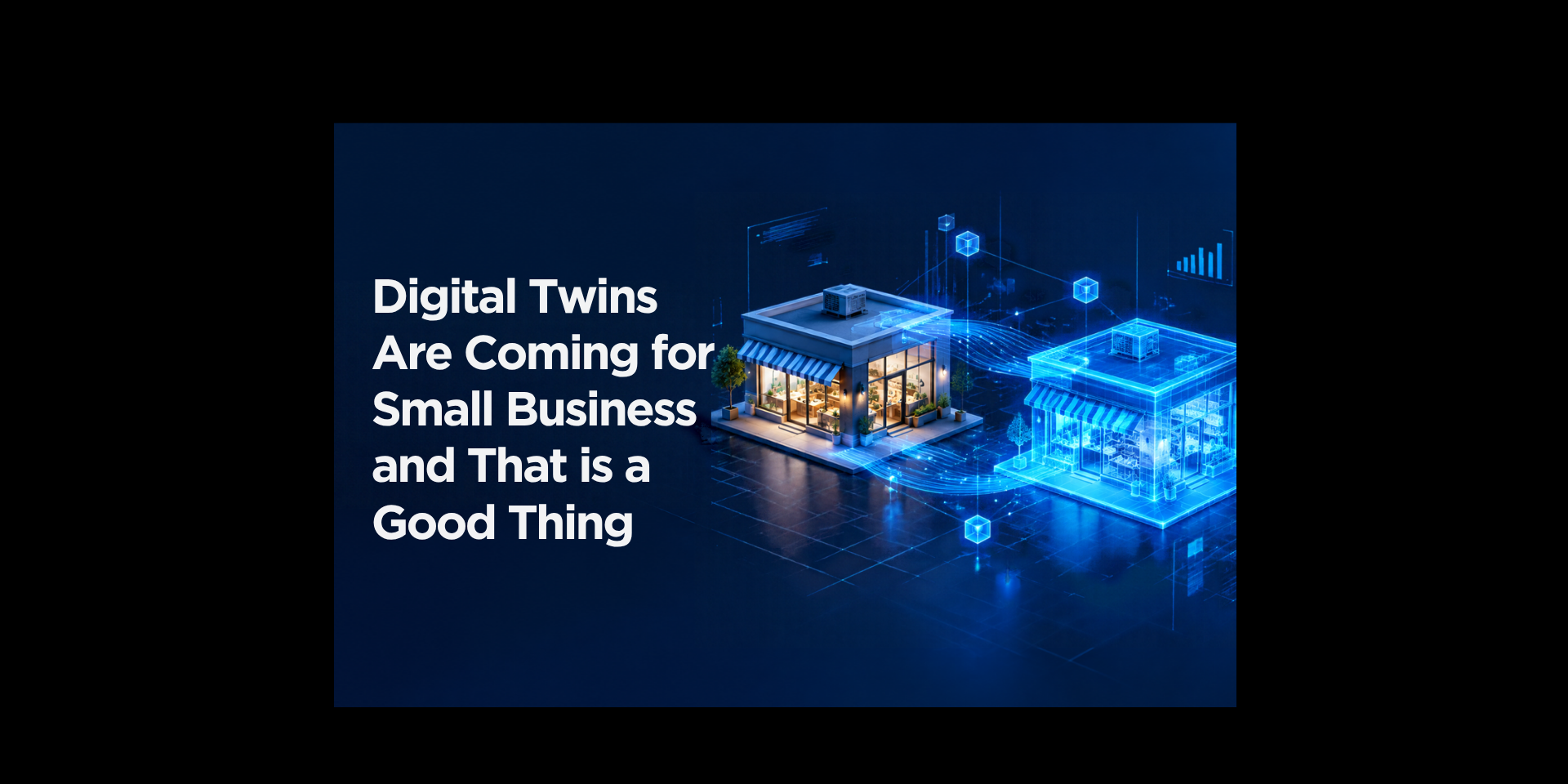
Happy Tuesday! Today we are covering a technology concept that has been widely discussed in enterprise and manufacturing circles for years but is now starting to reach a practical, accessible level for smaller businesses: digital twins. If you have heard the term but were not sure it applied to you, this post might change your perspective.
What a Digital Twin Actually Is
A digital twin is a virtual replica of a physical object, process, system, or even an entire business operation, built from real-time data and designed to be updated continuously as conditions change. The idea is that you can simulate, test, and optimize things in the virtual model before making changes in the real world, eliminating costly trial-and-error and giving decision-makers far better insight into what is actually happening and what will happen if they make certain changes.
At the 2026 SAS Innovate conference, SAS CTO Bryan Harris described digital twins as the natural evolution beyond agentic AI, noting that by combining machine learning, generative AI, optimization, and real-time data, digital twins become living replicas of complex operations that businesses can use to make smarter decisions at scale.
Where It Is Already Working
Manufacturing and Operations Manufacturers are using digital twins to simulate production line changes before implementing them, predict equipment failures before they happen, and optimize energy consumption in real time. The ROI is well documented: fewer unplanned outages, less wasted material, and faster adaptation when conditions change.
Supply Chain Optimization Businesses with complex supply chains are using digital twins to model disruption scenarios, run what-if analyses, and identify vulnerabilities before they become operational crises. In the post-pandemic environment, supply chain resilience has become a top business priority, and digital twins are a key tool in that effort.
Retail and Service Businesses Digital models of customer flow, inventory turnover, and service delivery are helping smaller businesses optimize staffing, reduce waste, and understand where operational bottlenecks exist that would otherwise take months of manual observation to identify.
The Accessibility Curve Is Bending
What kept digital twin technology out of reach for smaller businesses until recently was cost and complexity. Both of those barriers are dropping fast. Cloud-based platforms and SaaS tools are making it possible to build meaningful operational models without enterprise-level budgets or dedicated data science teams.
This Is Where RJ2T Comes In
RJ2 Technologies helps businesses understand which emerging technologies are genuinely ready for adoption versus which ones are still years away from practical value. Digital twins are moving quickly into the practical category, and the businesses that start building data-driven operational models now will have a significant advantage as the tools become mainstream. We help you build the data infrastructure and connected systems that make these capabilities possible.
Book your free discovery call here: https://meetings.hubspot.com/jeff-dann/free-discovery-call